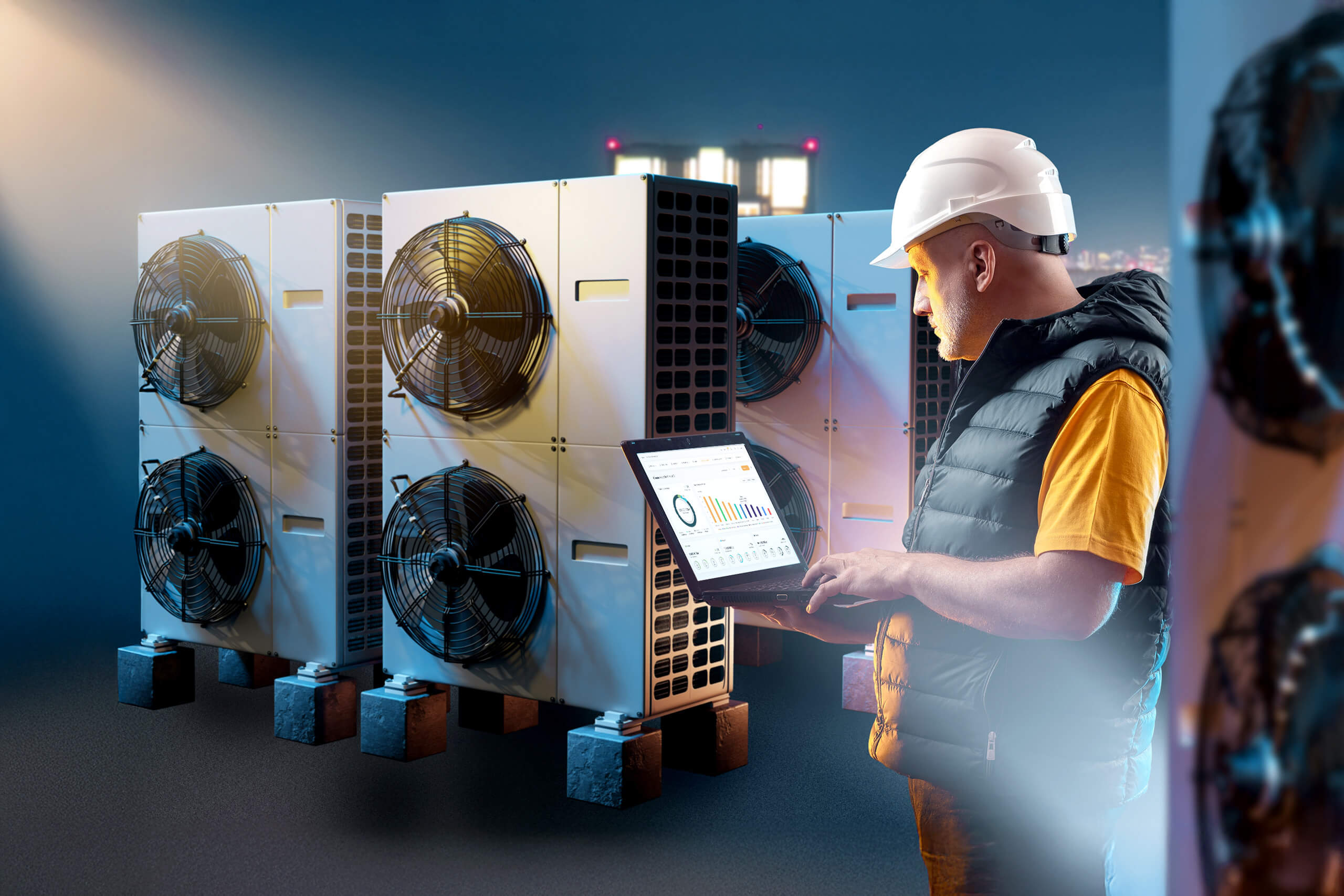
How technical service & installation firms use energy data to prove energy savings
Customer expectations, regulation, and sustainability goals mean that installers must deliver proof and transparency— on top of their hardware services.
Why energy data matters in a crowded market
The market for technical service and installation companies is more competitive than ever. Whether in electrical systems, HVAC, VVS, or BMS/CTS, many providers offer similar installation capabilities. For customers, it can be difficult to see the difference.
At the same time, expectations and demands have shifted. Building owners face increasing requirements from authorities—they are required to deliver proof of energy performance, documented energy savings, and compliance with ESG and ISO 50001 standards. In the EU, buildings account for about 40% of final energy consumption and ~36% of energy-related greenhouse gas emissions, making efficiency gains a strategic priority. (European Commission – Focus: Energy efficiency in buildings)
This drives a new strategic direction towards leveraging energy and resource data to add and deliver documented value to your existing value proposition.
The pain: installation without insight
Despite major investments in smart building technology, many end-customers remain without reliable insights to operate buildings.
- Lack of data insight: Installers hand over hardware, but performance after installation is invisible.
- Complex documentation: Proving energy savings requires manual follow-up and is resource-heavy.
- Compliance pressure: Customers demand support for ISO 50001, ESG reporting, and CO₂ reduction, which is hard to deliver without reliable data.
These challenges can affect trust, as customers may find it difficult to see the measurable impact of installations.
The solution: energy management systems deliver proof and performance.
An Energy Management System (EMS) closes this gap. It transforms technical installations into measurable value:
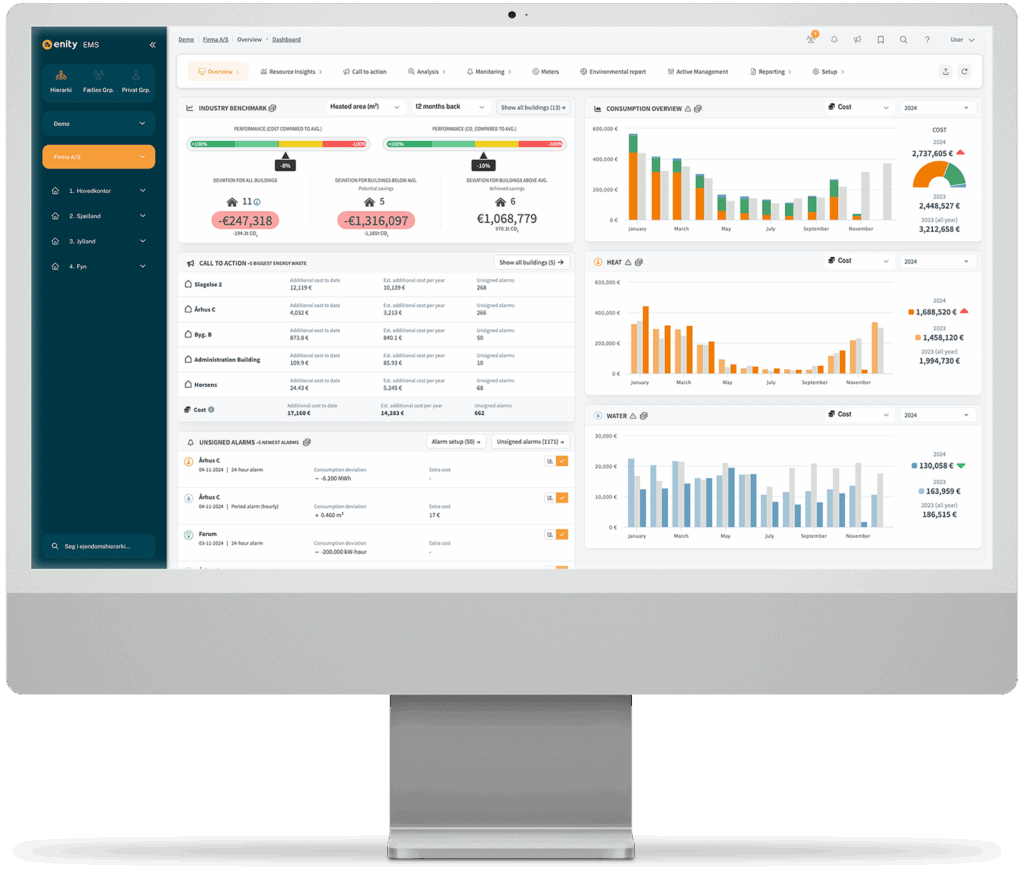
- Automated data collection from utility meters, submeters, IoT sensors, and BMS systems.
- Performance feedback on HVAC, lighting, and other installations—turning projects into data-driven services.
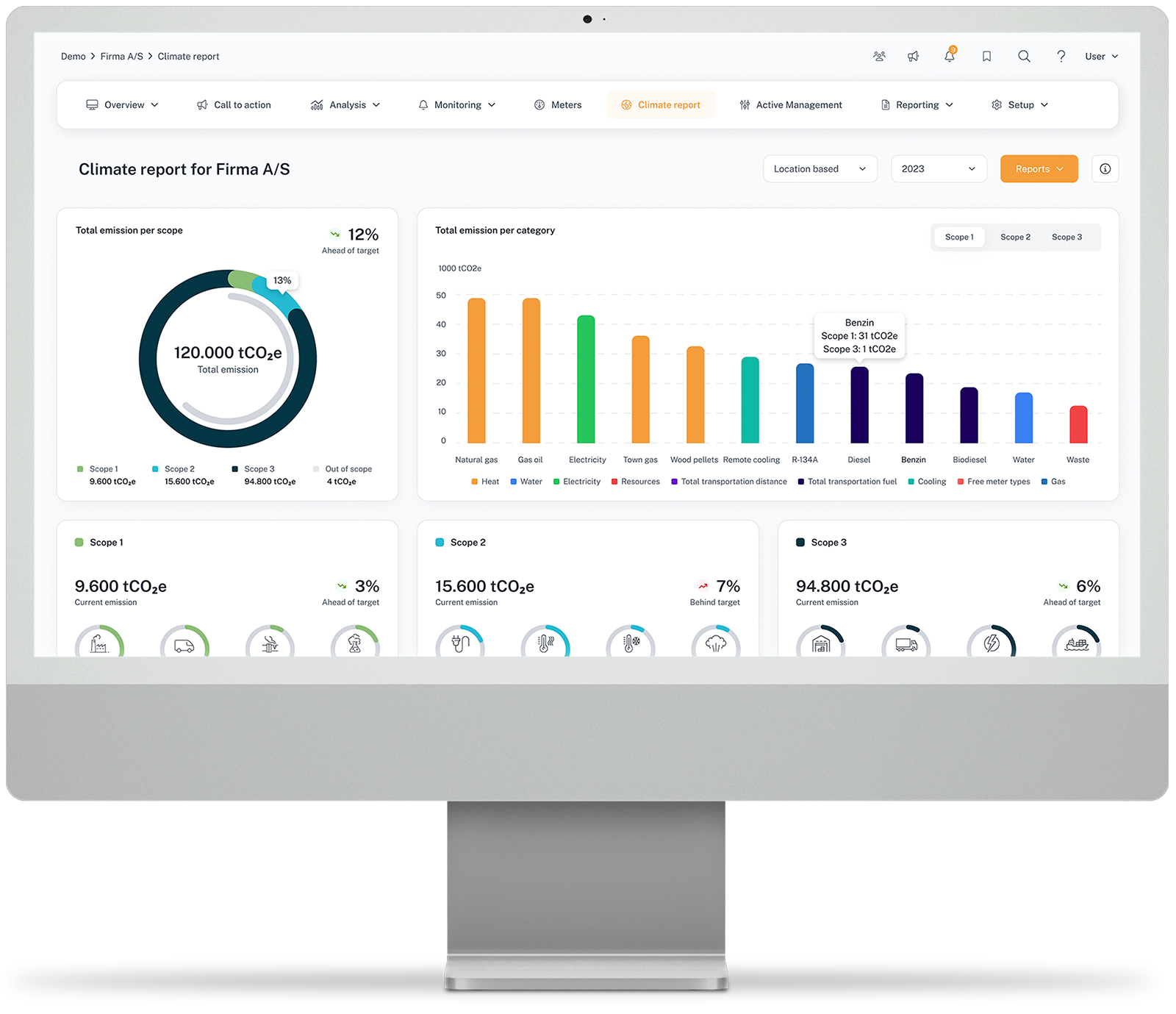
- Automated documentation of energy savings, CO₂ reduction, and ROI.
- Compliance support with frameworks such as ISO 50001 and the GHG Protocol
As the International Energy Agency highlights, HVAC and lighting are among the largest energy users in commercial buildings, and poor scheduling alone can lead to significant waste. With EMS, service providers can make these inefficiencies visible, and deliver quick wins for customers—turning what was once a one-off installation into ongoing, measurable value through automation, savings, insights and actions.
Partner with Enity
Join our network of partners and bring
smarter energy solutions to your customers.
Market trend: from projects to recurring services
The business model for technical service companies is transforming. Margins on projects are under pressure, while customers increasingly demand continuous value and impact.
- Recurring revenue: EMS allows service & installation companies to bundle monitoring and reporting into service agreements, joining a SaaS business- and delivery model
- Data-driven maintenance: Instead of waiting for breakdowns, installers can offer predictive maintenance based on actual performance.
- Regulatory push: The EU’s Energy Performance of Buildings Directive (EPBD) increases requirements for building performance data and energy upgrades.
- Customer expectations: PropTech investments are accelerating—driving demand for transparency, real-time data, and measurable sustainability outcomes. In other words, green ambitions start with data.
Customers are increasingly looking for partners who can integrate equipment, manage data, and support ongoing performance improvements, rather than just handling installations. The value: from installer to strategic advisor/partner
With EMS, technical service & installation companies can reposition themselves:
- Differentiate in a crowded market: Move from “just another installer” to a data-driven service provider.
- Strengthen customer trust: Document every kWh saved and every ton of CO₂ avoided.
- Build long-term contracts: Use EMS as part of ongoing service agreements, creating recurring revenue.
- Optimize installations: Feedback loops from EMS improve performance and enable proactive adjustments.
- Support sustainability goals: Help customers comply with ISO 50001, ESG requirements, and carbon reduction targets.
The U.S. Department of Energy notes that hospitals are among the most energy-intensive buildings due to their 24/7 operations and strict ventilation demands. For service providers, this means that inefficiencies in heating or ventilation quickly translate into high costs. An EMS enables providers to identify unnecessary consumption—such as heating during low-occupancy periods—and take corrective action, improving both sustainability performance and customer trust.
Datadriven value is a new competitive advantage
For technical service and installation companies, the ability to deliver energy data-driven value is the new competitive edge:
- Prove ROI with automated documentation.
- Win bigger contracts tied to customer sustainability KPIs.
- Reduce churn by becoming indispensable in compliance and ESG reporting.
- Future-proof the business by aligning with smart building and PropTech trends.
Make it easy and transparent for your customers to understand their resource consumption, so they can take concrete steps to reduce it. Enable them to set targets for the green transition, through insight into energy consumption.
Book a demo
Prove every kWh saved. Win recurring service agreements.
See how EMS helps service & installation companies prove performance, document energy savings, and secure long-term service contracts.
FAQ: energy data for technical service companies
What is an Energy Management System (EMS)?
An EMS collects, analyzes, and reports energy data from buildings (and much more) —turning raw information into actionable insights and ROI documentation.
How does EMS help technical service companies?
It enables them to offer differentiated, data-driven services, optimize installations, and build long-term service contracts.
Why is EMS important for compliance?
EMS automates documentation for ISO 50001 certification and ESG reporting in line with the GHG Protocol
How does EMS create recurring revenue?
By embedding EMS into service agreements, companies can offer ongoing monitoring, reporting, and optimization—moving beyond one-off projects.
What types of customers benefit most?
Large portfolios like office buildings, hospitals, retail chains, and industrial sites, where small inefficiencies scale into significant costs and emissions.
Download brochure
Read more about energy efficiency with Enity EMS. To the benefit of both the budget and the climate.
Book a demo
We show you the possibilities and potentials for optimizing your energy consumption.