
Market-based vs. location-based Scope 2 emissions explained
Why the choice matters for carbon accounting, data consistency and reporting credibility
Why Scope 2 calculation methods matter more than they appear
Scope 2 emissions are often perceived as one of the more straightforward parts of carbon accounting. Electricity is consumed, emission factors are applied, and the result is reported as indirect emissions from purchased energy.
In practice, however, Scope 2 calculations depend heavily on how electricity-related emissions are defined and attributed. The distinction between market-based and location-based Scope 2 is a key example of this.
While both methods are well established and widely used, they answer different questions and can produce significantly different results — even when electricity consumption remains unchanged. Scope 2 is one of the three standard emission categories used in carbon accounting, alongside Scope 1 and Scope 3, which are explained in more detail in Scope 1, Scope 2 and Scope 3 emissions explained.
As reporting expectations increase and organisations are expected to explain their numbers with greater transparency, understanding the difference between market-based and location-based Scope 2 becomes essential. Not because one method is “better” than the other, but because Scope 2 calculations form part of a broader carbon accounting framework where consistency, documentation and data quality increasingly determine the credibility of reported emissions and the decisions based on them. Read more in What is carbon accounting — and why it matters for decision-making.
Key
Takeaways
- Market-based and location-based Scope 2 answer different questions
- Neither method is inherently more accurate than the other
- Reported Scope 2 emissions can vary significantly depending on the chosen method
- Consistency and documentation matter more than selecting the lowest result
Why Scope 2 has two calculation methods
Electricity differs from many other emission sources. It is produced centrally, transported through shared infrastructure, and consumed locally. As a result, the emissions associated with electricity use cannot be described by a single, universal factor.
To reflect this complexity, carbon accounting distinguishes between two complementary approaches:
- a location-based method, which reflects the average emissions intensity of the electricity grid where consumption occurs
- a market-based method, which reflects contractual purchasing decisions related to electricity supply
Both approaches are defined and described in widely used frameworks such as the Greenhouse Gas Protocol. Rather than competing methodologies, they provide different perspectives on electricity-related emissions.
What is location-based Scope 2?
How location-based Scope 2 emissions are calculated
Location-based Scope 2 emissions are calculated using average emission factors for the electricity grid in a specific geographic area. These factors typically reflect the mix of energy sources used to generate electricity within a defined region or country.
Electricity consumption is multiplied by the relevant grid-average emission factor to calculate CO₂e emissions.
What location-based Scope 2 represents in practice
Location-based Scope 2 reflects the physical reality of electricity generation and supply. It shows the emissions intensity of the electricity system an organisation is connected to, regardless of individual purchasing decisions.
This makes location-based Scope 2 useful for understanding exposure to regional energy systems and tracking changes in grid decarbonisation over time.
When location-based Scope 2 is typically used
Location-based Scope 2 is commonly used for:
- establishing baseline emissions
- comparing emissions across locations or regions
- analysing long-term trends linked to grid decarbonisation
Because it relies on standardised grid factors, it supports comparability across organisations operating in the same geography.
What is market-based Scope 2?
How market-based Scope 2 emissions are calculated
Market-based Scope 2 emissions are calculated using emission factors linked to contractual instruments associated with electricity purchasing. These may include supplier-specific emission factors, meaningfully sourced energy attribute certificates, or guarantees of origin, depending on market structure and data availability.
Electricity consumption is matched with the emission characteristics of the contracted supply, where contractual instruments meet defined quality criteria.
What market-based Scope 2 represents in practice
Market-based Scope 2 reflects procurement decisions rather than physical electricity flows. It shows how an organisation has chosen to source electricity through contracts and purchasing arrangements.
As a result, market-based Scope 2 is often used to demonstrate the impact of renewable electricity sourcing strategies and supplier choices.
Common sources of confusion
Market-based Scope 2 frequently gives rise to misunderstandings, including:
- assumptions that market-based results automatically equal zero emissions
- incomplete or inconsistent certificate coverage
- changes in suppliers or contracts that affect results year to year
Without clear documentation, market-based Scope 2 results can be difficult to explain and reproduce.
What is the difference between market-based and location-based Scope 2?
The key difference between the two methods lies in what they are designed to represent.
- Location-based Scope 2 reflects the average emissions intensity of the local electricity system
- Market-based Scope 2 reflects contractual electricity sourcing decisions
Both methods are applied to the same underlying electricity consumption data, yet they often produce different results. These differences tend to increase in markets where renewable electricity contracts and certificates are widely used.
Importantly, neither method replaces the other. They are complementary perspectives that serve different analytical and reporting purposes.
Which Scope 2 method should organisations use?
Reporting expectations and common practice
Many reporting frameworks and guidelines encourage organisations to calculate and disclose both market-based and location-based Scope 2 emissions when contractual instruments are available. This approach is commonly referred to as dual reporting.
The Greenhouse Gas Protocol defines both methods and supports a dual-perspective approach, as it allows electricity-related emissions to be viewed from both a physical grid perspective and a contractual sourcing perspective. While dual reporting is not mandated in all cases, calculating and disclosing both methods is widely recognised as best practice when relevant data exists.
Within the EU, sustainability reporting requirements under the Corporate Sustainability Reporting Directive (CSRD), including ESRS E1, further increase the emphasis on transparency, explainability and methodological clarity. In practice, many organisations are therefore expected to disclose both market-based and location-based Scope 2 emissions, or clearly explain why only one method is used. This enables stakeholders to understand both exposure to the electricity grid and the impact of electricity sourcing decisions.
Is market-based Scope 2 more accurate?
Accuracy depends on the question being asked.
Market-based Scope 2 is not inherently more accurate than location-based Scope 2. Each method provides accuracy within its own context:
- market-based Scope 2 is accurate for reflecting procurement and sourcing choices
- location-based Scope 2 is accurate for reflecting grid-related emissions
In most cases, challenges arise not from the choice of method itself, but from inconsistent application over time, unclear assumptions or insufficient documentation.
Where organisations often struggle in practice
In practice, many organisations encounter challenges when applying Scope 2 methodologies consistently over time.
Common issues include:
- fragmented electricity data across sites, meters and suppliers
- changing emission factors or certificate coverage year to year
- manual calculations that break comparability
- limited documentation of methodological decisions
These challenges often become visible only after reporting matures and expectations increase.
EMS as a practical foundation for consistent Scope 2 calculations
An Energy Management System (EMS) provides a structured foundation for handling electricity data in a consistent and repeatable way. By centralising and validating electricity consumption across sites and organisational boundaries, an EMS establishes a stable dataset that can be reused year after year.
When Scope 2 calculation logic is applied on top of this dataset — including separate handling of market-based and location-based emission factors — results become traceable to underlying data and assumptions. This supports transparency, documentation and reproducibility without increasing manual effort.
Enity EMS is built around this principle, combining structured energy data with transparent Scope 2 emissions overviews aligned with recognised carbon accounting frameworks.
Why the Scope 2 method choice matters for carbon accounting quality
Scope 2 emissions are often a significant part of an organisation’s total carbon footprint. The credibility of reported results therefore depends not only on accurate data, but on the ability to explain how figures were calculated and why they change over time.
A clear and consistent approach to Scope 2 supports:
- credible external reporting
- informed internal decision-making
- auditability and stakeholder trust
Conclusion
Market-based and location-based Scope 2 emissions provide two complementary perspectives on electricity-related emissions. While they may produce different results, both are essential for transparent and credible carbon accounting.
The real challenge is not choosing between methods, but ensuring consistent application, clear documentation and reliable underlying data. Organisations that treat Scope 2 as an ongoing data discipline — rather than a one-off calculation — are better prepared to meet evolving reporting expectations with confidence.
FAQ about market-based and location-based Scope 2
What is the difference between market-based and location-based Scope 2?
The difference between market-based and location-based Scope 2 emissions lies in what they represent: market-based Scope 2 reflects electricity procurement decisions, while location-based Scope 2 reflects the average emissions intensity of the local electricity grid.
What is market-based Scope 2?
Market-based Scope 2 emissions are calculated using emission factors linked to electricity contracts and certificates, rather than average grid emission factors.
What is location-based electricity?
Location-based electricity refers to electricity consumption assessed using regional grid-average emission factors, reflecting the emissions intensity of the local electricity system.
How is market-based Scope 2 calculated?
Market-based Scope 2 is calculated by matching electricity consumption with supplier-specific or certificate-based emission factors linked to contractual instruments.
Which Scope 2 method should companies use?
Many companies calculate and disclose both market-based and location-based Scope 2 emissions to improve transparency, comparability and explainability.
Is market-based Scope 2 more accurate?
Market-based Scope 2 is not inherently more accurate than location-based Scope 2. Each method is accurate for the perspective it is designed to represent.
Relevant links & resources on market-based
and location-based Scope 2
Greenhouse Gas (GHG) Protocol
Scope 2 Guidance and electricity accounting
ISO 14064
Greenhouse Gas Standards
Webinar On-Demand
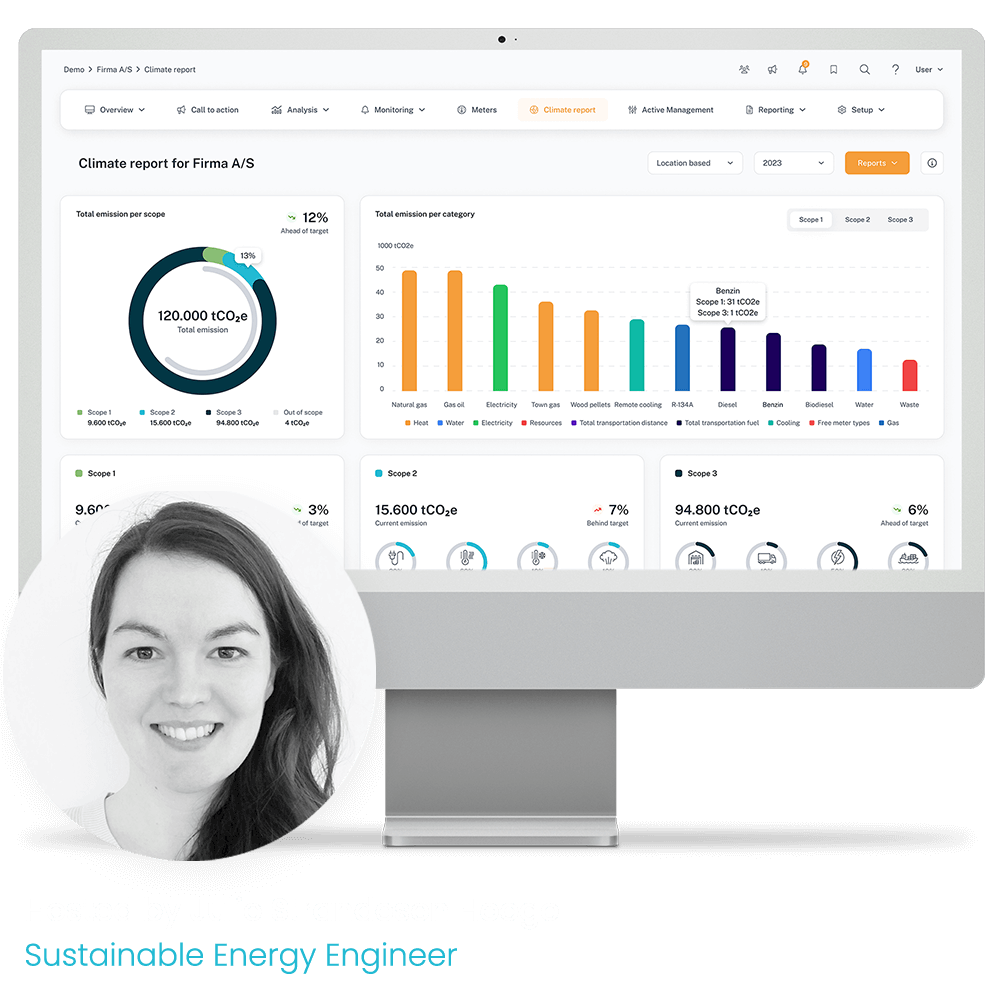
How to automate your carbon accounting
An on-demand introduction to carbon accounting — covering core concepts, key legislation, data structure and automation in practice.
- Carbon accounting fundamentals, including Scope 1, 2 and 3
- Key legislation and expectations around sustainability reporting
- How data, emission factors and EMS support consistent carbon accounting
Enity EMS
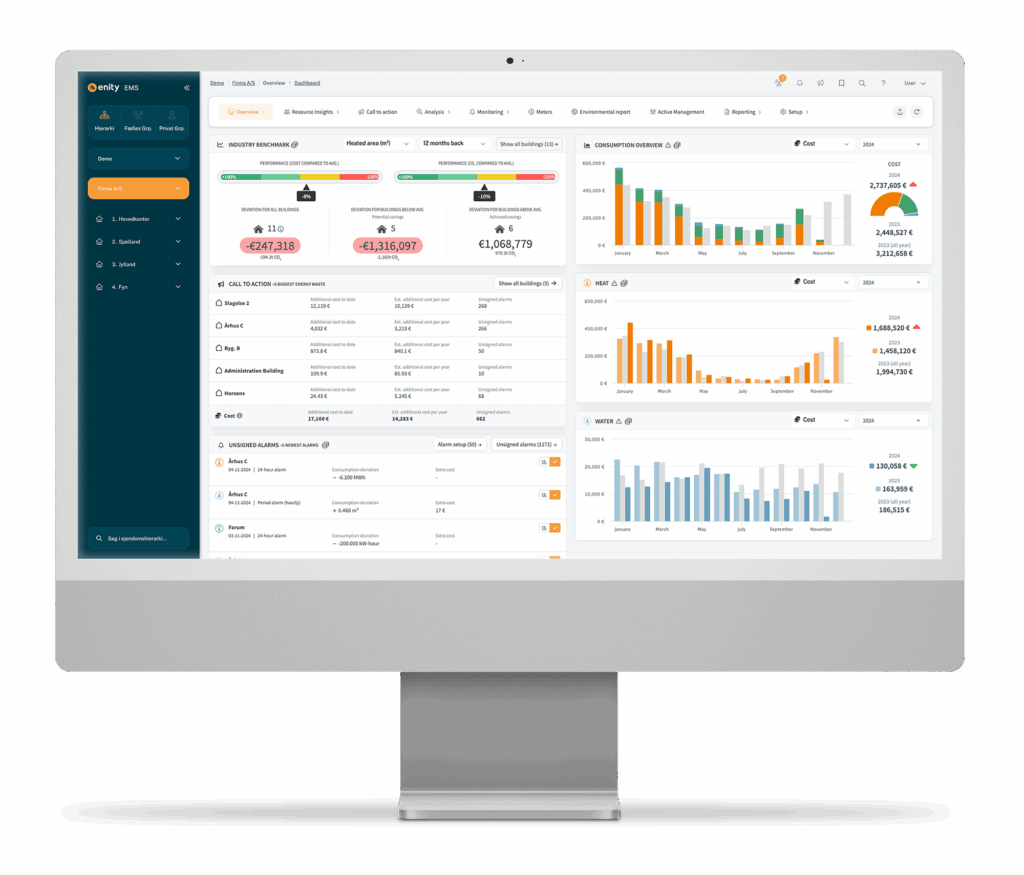
One platform for all your consumption data
To make confident decisions about your energy consumption, you need insights that are presented clearly, concisely, and in one place. Our goal is to organise your data in a way that means trends are clearly recognised, problems easily spotted, and cost saving opportunities effortlessly identified.
- Dashboards – easy customisation, you decide what you see
- Tracking tools – alerts, budgets, and site comparisons
- Data exports – ready for ESG, CSRD, ISO and internal use
Download brochure
Read more about energy efficiency with Enity EMS. To the benefit of both the budget and the climate.
Book a demo
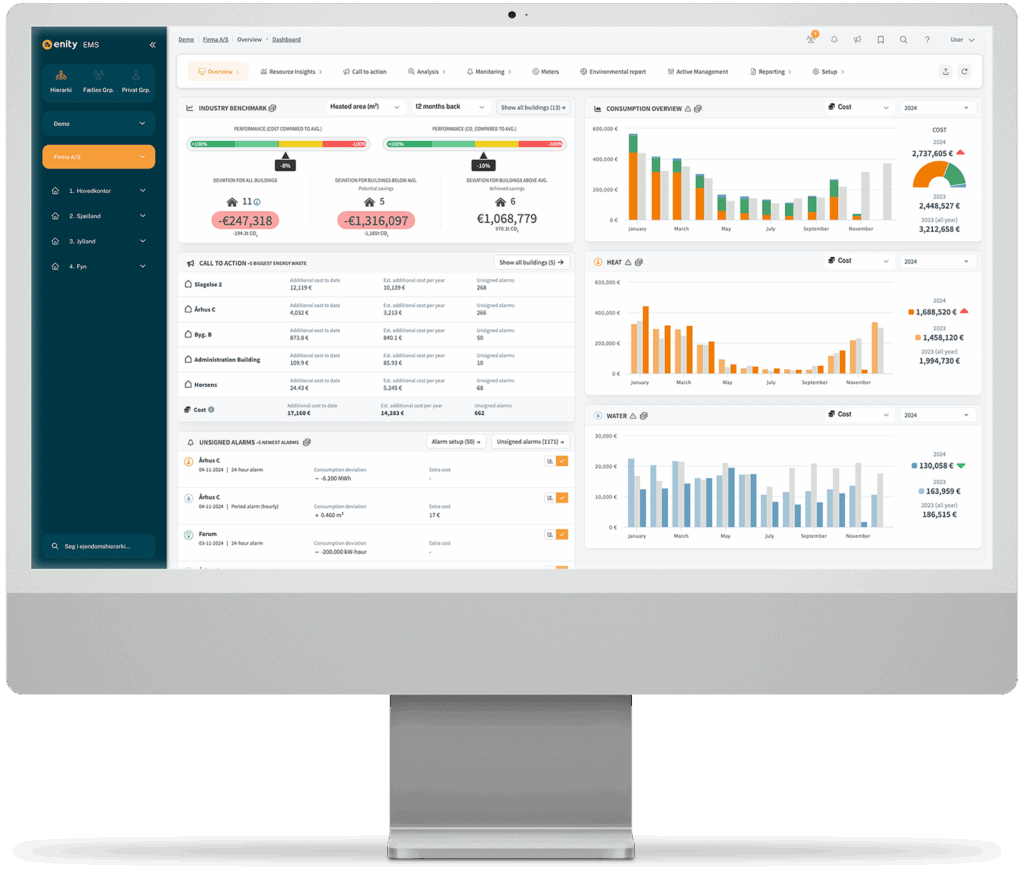
We show you the possibilities and potentials for optimizing your energy consumption.