24,000 litres of water vanished while the building slept
Around 1 m³ of water an hour, around the clock, in a university building of more than 130,000 m²
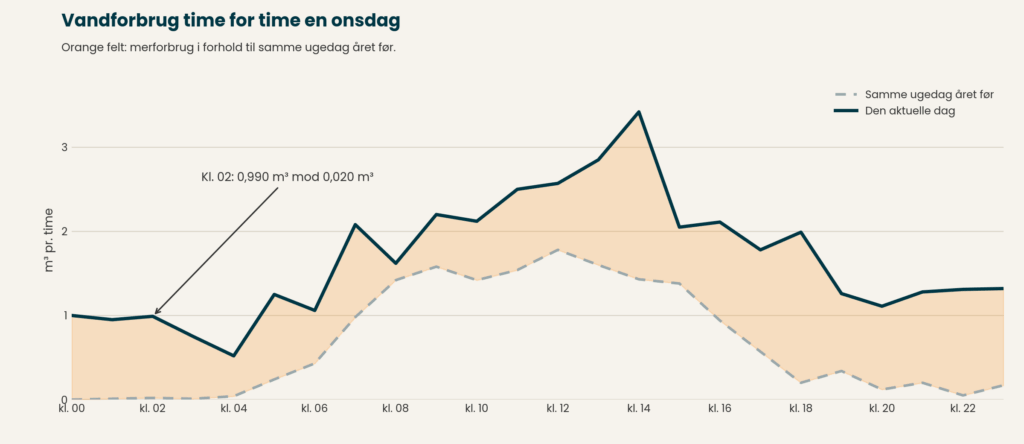
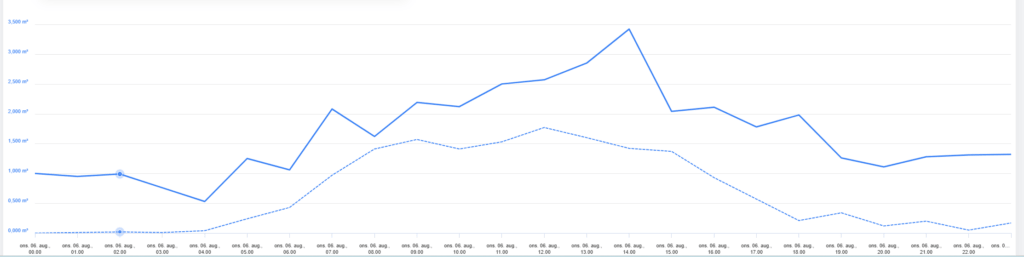
At night, the water meter should barely move. Instead, in a university building of more than 130,000 m², around 1 m³ of water an hour was flowing, around the clock. That is around 50 times as much as on the same night a year earlier. Enity EMS raised an alert, and the customer had the leak fixed.
50x
The amount of water flowing at 2 am, compared with the same night a year earlier
24 m³
Excess consumption in one day, equal to around 160 full bathtubs
Running toilets
The likely cause, in a building of more than 130,000 m²
What happened?
What the data shows
On the same night a year earlier, consumption dropped to almost zero and only rose once the building came into use. Now there is a constant floor of around 1 m³ an hour throughout the day, including in the evening, when consumption normally falls. The day’s activity sits on top of a constant leak.
People use water in waves: mornings, lunchtime, breaks. Consumption that stays perfectly flat all night rarely comes from people. It usually comes from installations, such as a running toilet, a leaking valve or a faulty cistern.
One or two toilets in 130,000 m²
The building has a great many toilets, and the leak was most likely caused by one or two of them running. It’s a small fault, but it runs around the clock.
In a building that size, it’s like looking for a needle in a haystack. The fault is somewhere among a great many toilets and installations, and nobody has a reason to look until someone knows there is a problem.
A running toilet makes no noise, and there’s no water on the floor. Without hourly data, nothing gives it away.
How the leak was found
Enity EMS registered that night-time water consumption was far above normal and triggered an alert. The customer was notified, found the fault and fixed the problem.
The alert doesn’t just say there’s a problem. It also shows when it started and how much is flowing. That makes it easier to go straight for the fault.
What does it mean?
How much is 24,000 litres?
A standard bathtub holds around 150 litres. So the excess consumption in one day equals around 160 full bathtubs. Had the leak been allowed to continue for a whole year, it would have added up to around 8,700 m³.
Why is waiting so costly?
Water leaks are silent and rarely visible. In a large building with many toilets and installations, a leak can run for weeks before anyone notices. Every day with an extra 24 m³ is money going straight down the drain.
How to spot it yourself
- Look at water consumption between 1 am and 4 am.
- If it never gets close to zero, water is running somewhere.
- Steady, flat night-time consumption points to an installation. Consumption that fluctuates points to activity.
- Or let the system keep watch for you: with alerts on your meters, you’re notified automatically when consumption deviates.
What it looked like in Enity
More cases from the meters
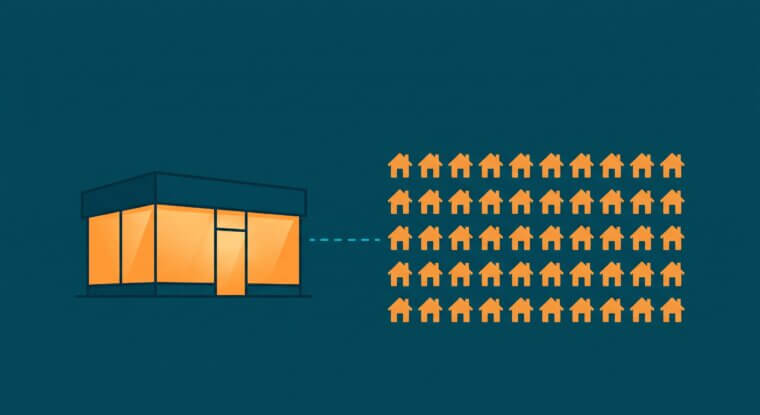
- An empty retail unit used as much electricity as 50 households
- A daycare centre used as much water every day as a family uses in three months
- Do you know which of your sites are working overtime tonight?
See all customer cases, or read more about Enity for the public sector.
Frequently asked questions
How can you tell if a building has a water leak?
The clearest sign is night-time water consumption that doesn’t drop to almost zero. With hourly data and alerts, you can see it the same day, rather than when the bill arrives.
What are the most common causes of water leaks?
Running toilets, leaking valves, faulty cisterns and installation faults are among the most common. In this case, it was most likely one or two running toilets.
How do you find a water leak in a large building?
By tracking water consumption hour by hour and getting an alert when it deviates from normal. That way you know there’s a leak, and when it started, before you start looking.
We can help you, too
Download brochure
Read more about energy efficiency with Enity EMS. To the benefit of both the budget and the climate.
Book a demo
We show you the possibilities and potentials for optimizing your energy consumption.