Do you know which of your sites are working overtime tonight?
A shop’s ventilation ran all night. Enity EMS raised an alert the same night.
One Sunday night, a shop in a shopping centre used more than five times as much electricity as on the same night a year earlier. The ventilation was running around the clock. Enity EMS raised an alert that same night, the customer fixed the fault, and two days later night-time consumption was lower than the year before.
7 → 39 kWh
Electricity use per hour at night, before and during the fault
Same night
Enity EMS raised an alert the same night the excess consumption began
2 days
From alert to fix. Afterwards, night-time use was lower than the year before
What happened?
What the data shows
From midnight until morning, consumption held steady at around 39 kWh an hour. On the same night a year earlier, it was around 7 kWh. During the day, consumption was almost identical to the year before, and in the evening it dropped back to its normal level. So something was running all night that hadn’t been the year before.
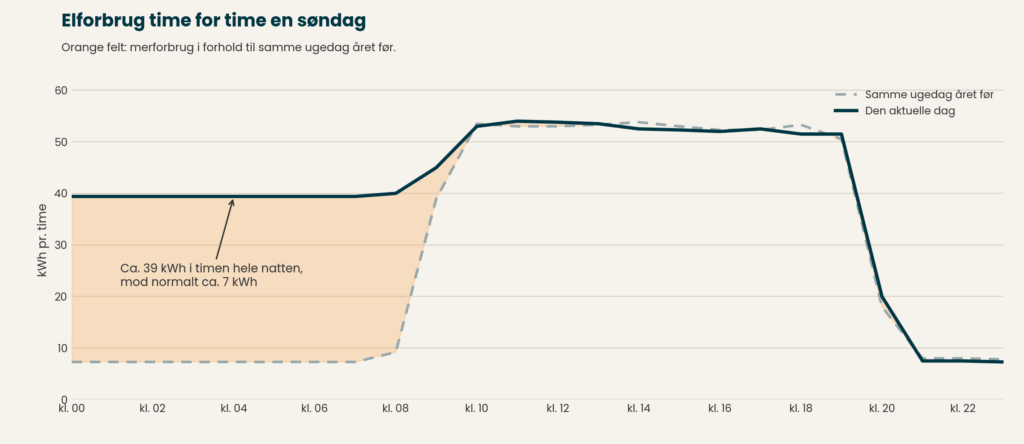
The cause: ventilation that never clocked off
It turned out that the shop’s ventilation was running around the clock instead of following opening hours. During the day there was no visible difference, because the ventilation needed to run anyway. But at night, with the shop empty, it was running at full power for no reason.
It’s a common fault. A changed schedule, a manual override that was never switched off, or a control fault can keep ventilation running 24 hours a day. Nobody notices, because nobody is in the building when it happens.
During the day, consumption was completely normal. It was the hours when nobody was there that cost money.
How it was found
Enity EMS monitors consumption on the shop’s electricity meter hour by hour. In the first hour after midnight, consumption was 39.43 kWh, against a normal night-time maximum of 7 kWh. The system registered a deviation of 32.43 kWh and automatically triggered an alert.
The alert also showed what the deviation was costing: around €4 an hour. Because the customer has an Enity Full Service subscription, Enity’s support team followed up on the alert and contacted the customer, who had the ventilation fault fixed.

The result
Two days later, night-time consumption was around 6.6 kWh an hour. That is not just back to normal, but slightly lower than on the same night a year earlier.
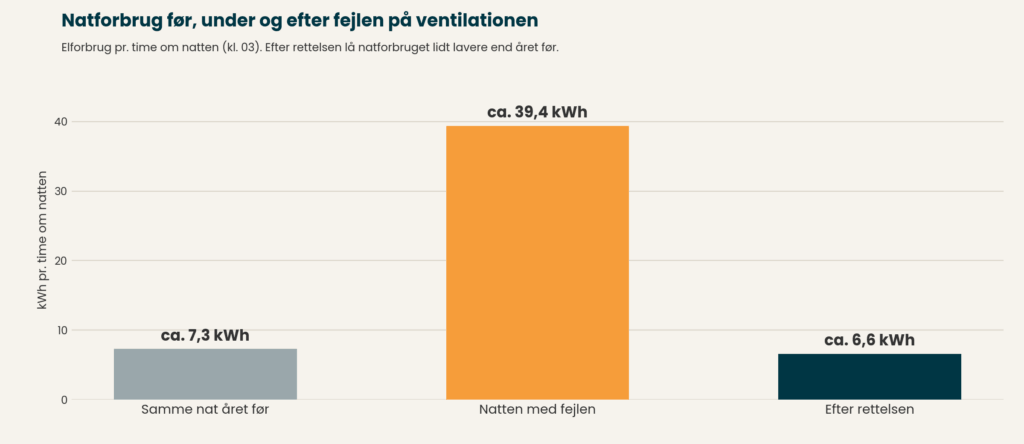
- Alert the same night the excess consumption began
- Fault fixed within two days
- Excess consumption avoided: around 290 kWh for every night the ventilation would otherwise have run
What does it mean?
Why does the night matter so much?
Night-time consumption is the building’s baseload: what it uses regardless of activity. When the baseload rises, it hits every hour without activity, and that is a large part of the day. If you have many sites, small deviations in baseload can add up to big numbers over a year.
Had the ventilation run every night for a year, the excess consumption would have been around 105,000 kWh. That equals the annual use of around 26 households.
How much is 290 kWh?
An average Danish household uses around 4,000 kWh of electricity a year, or around 11 kWh a day*. So the excess consumption on a single night equals what around 25 households use in a day.
*source: Bolius
Why doesn’t it show up on the electricity bill?
The day ended 43.5% above the same day a year earlier. On a monthly bill, a single night disappears into the rest of the month, and across many sites it is impossible to find. Only when you look at consumption hour by hour and compare it with the normal level does the pattern become clear.
How to spot it yourself
- Look at consumption between midnight and 5 am, when the building is empty.
- Compare with the same weekday a year earlier, not with the day before.
- If night-time consumption rises while daytime consumption stays the same, something is running that should be switched off. Typically it’s equipment with the wrong schedule, such as ventilation, lighting, refrigeration or heating.
- Or let the system keep watch for you: with alerts on your meters, you’re notified automatically when consumption deviates.
What it looked like in Enity
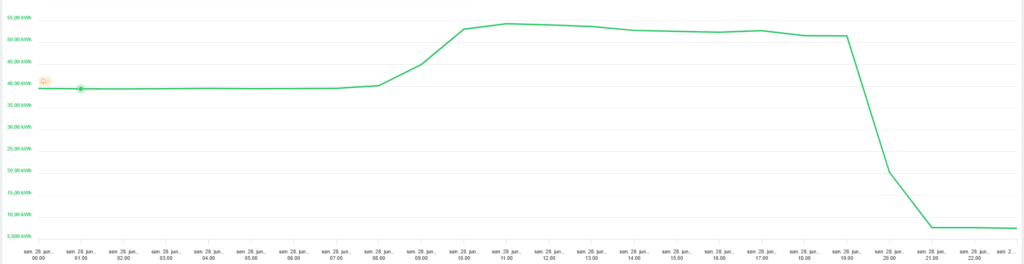
More cases from the meters
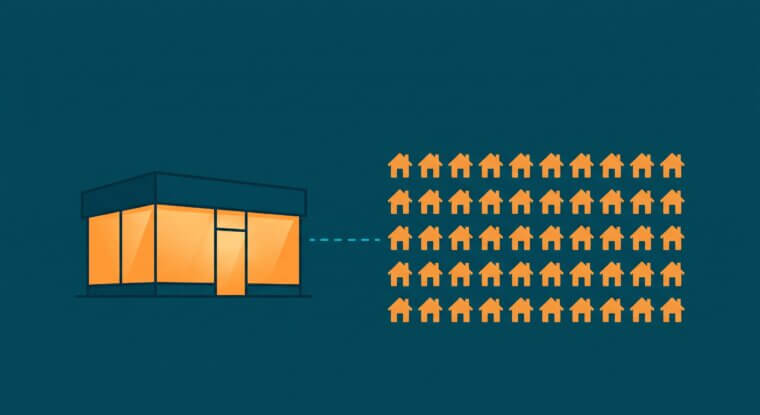
- An empty retail unit used as much electricity as 50 households
- A daycare centre used as much water every day as a family uses in three months
- 24,000 litres of water vanished while the building slept
See all customer cases, or read more about Enity for retail and wholesale.
Frequently asked questions
What is normal night-time consumption for a shop?
It depends on the shop, but night-time consumption should be stable from one night to the next. The key is to know the building’s own normal level and act when it changes.
Why does a building’s night-time consumption rise?
Usually because equipment such as ventilation, lighting, refrigeration or heating runs outside opening hours, for example because of a changed schedule or a fault. In this case, it was the ventilation running around the clock.
How do you detect high night-time consumption?
By tracking consumption hour by hour and comparing it with the normal level. An energy management system like Enity EMS collects data from your meters and makes anomalies visible. With alerts, you don’t have to keep watch yourself: Enity EMS does it for you, and you’re notified automatically if consumption rises.
We can help you, too
Download brochure
Read more about energy efficiency with Enity EMS. To the benefit of both the budget and the climate.
Book a demo
We show you the possibilities and potentials for optimizing your energy consumption.